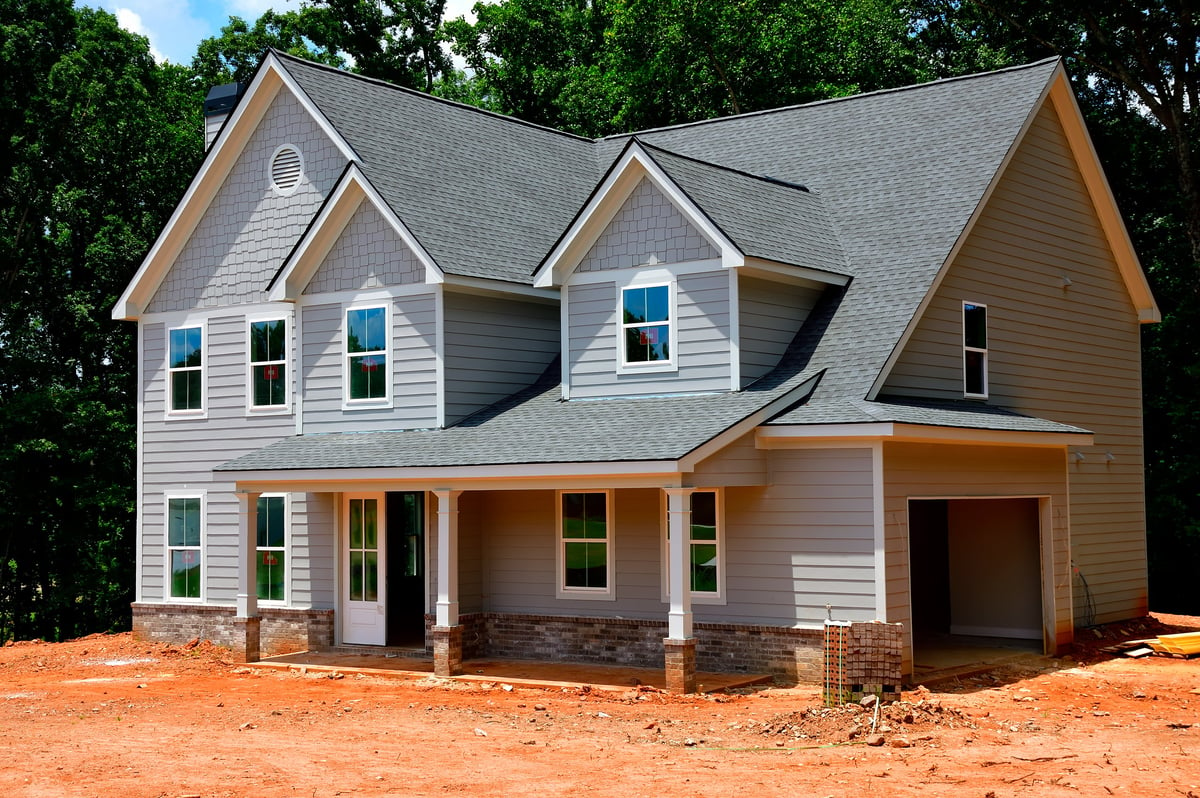
New homes come with warranties and warranties come with premiums. Resale comes with established trees and established problems. Here's how to compare the two on total five-year cost instead of sticker price.
Kris Sutton
TX Broker #644333
Greater Austin
The honest answer is that neither is better. They fail in different ways, and they reward different buyers. What matters is that you compare them on the same terms — and the terms that usually get skipped are maintenance, timing risk, and financing leverage.
A new home in a Greater Austin community is typically priced at a premium to nearby resale — frequently somewhere in the mid-single digits as a percentage of price. You are paying for the warranty, the current code, the energy envelope, and the ability to choose finishes. The question is whether that premium is worth it for your situation, not in the abstract.
If you've already narrowed it to new construction, the next two things to understand are how promotions distort the sticker price — here's how builder incentives actually work — and which of the Greater Austin communities are actually in play for your budget and commute.
Texas builder warranties typically run one year on workmanship, two on systems, and ten on structural. A resale home is sold as-is with no such safety net — you self-insure through inspection and reserves. The catch is that the warranty is a scope document with exclusions, not a blanket promise — read the warranty and arbitration terms closely before you count on it.
Current energy code, better windows, and modern HVAC sizing mean lower running costs. This shows up monthly, not on a listing sheet — which is why it gets ignored during the search and noticed after move-in.
A roof, HVAC system, and water heater all replaceable in the same decade is a real financial risk. In a new home, that risk is deferred roughly a decade or more.
Flooring, cabinets, and layout options at the design stage. Worth genuine money to some buyers and close to zero to others — be honest about which one you are before you pay a premium for it. Not all upgrades are worth paying the builder for — some are far cheaper after closing.
Established neighborhoods offer things a new community physically cannot: mature trees, proven school attendance zones, finished infrastructure, and — critically — a seller who is a person, not a corporation with a pricing committee. That last point matters more than most buyers realize. An individual seller negotiates on emotion and timeline. A builder negotiates on inventory and margin. Both can be leveraged, but only one can be moved by a repair request, an appraisal gap, or a fast close.
Resale also lets you buy a home whose flaws are visible. You can inspect it, walk the lot lines, meet the neighbors, and see how the house has actually held up through ten summers of Texas heat. New construction asks you to trust a plan.
Sticker price comparison is the wrong exercise. Model both homes over five years with these seven lines and the right answer usually becomes obvious — and it's often not the one you walked in expecting.
| Cost line | New build | Resale |
|---|---|---|
| Purchase price | Base + lot premium + upgrades | Negotiated one number |
| Cash at closing | Often reduced by builder credit | Seller concessions less common |
| First-year repairs | Covered by warranty | Budget 1–2% of price |
| Big-ticket risk | Deferred a decade+ | Depends entirely on age of systems |
| Monthly utilities | Typically lower | Varies with age and insulation |
| HOA dues | Common, sometimes steep, plus MUD/PID | Often lower or none |
| Timing risk | Completion date can slip | Close on a known date |
Many newer Greater Austin communities sit inside Municipal Utility Districts or Public Improvement Districts, which add a separate tax line on top of the standard rate. Combined with HOA dues, this can add several hundred dollars a month to a new build that a comparable resale doesn't carry. It's disclosed — but it's disclosed in a stack of paperwork, not on the flyer. Always get the full blended tax rate on the specific lot before you fall in love with the plan.
The disclosure lives in the contract documents — see the HOA, MUD, and PID clause for what to request and what to confirm in writing.
If new construction wins out, the practical next step is narrowing the map — browse new construction communities across Greater Austin by region, then compare current builder deals and incentives in the areas that fit your budget.
Three guides that pair with this one.
How Builder Incentives Actually Work in Austin
Buydowns, closing cost credits, design allowances, and price cuts — and how to price two offers against each other.
Inside the Model Home: What They Won't Tell You
Five things to look past in the showroom, plus the six questions to ask at the table.
Free Builder Guide: Read the Builder, Not the Sign
A 15-page walkthrough of how builder pricing, inventory, and incentives are actually decided.
Tell us the neighborhoods you're considering and we'll run the five-year comparison on a real new build and a real resale, including the full tax rate and HOA picture.
Pura Vida Realty Group, Inc. · Kris Sutton, TX Real Estate Broker #644333