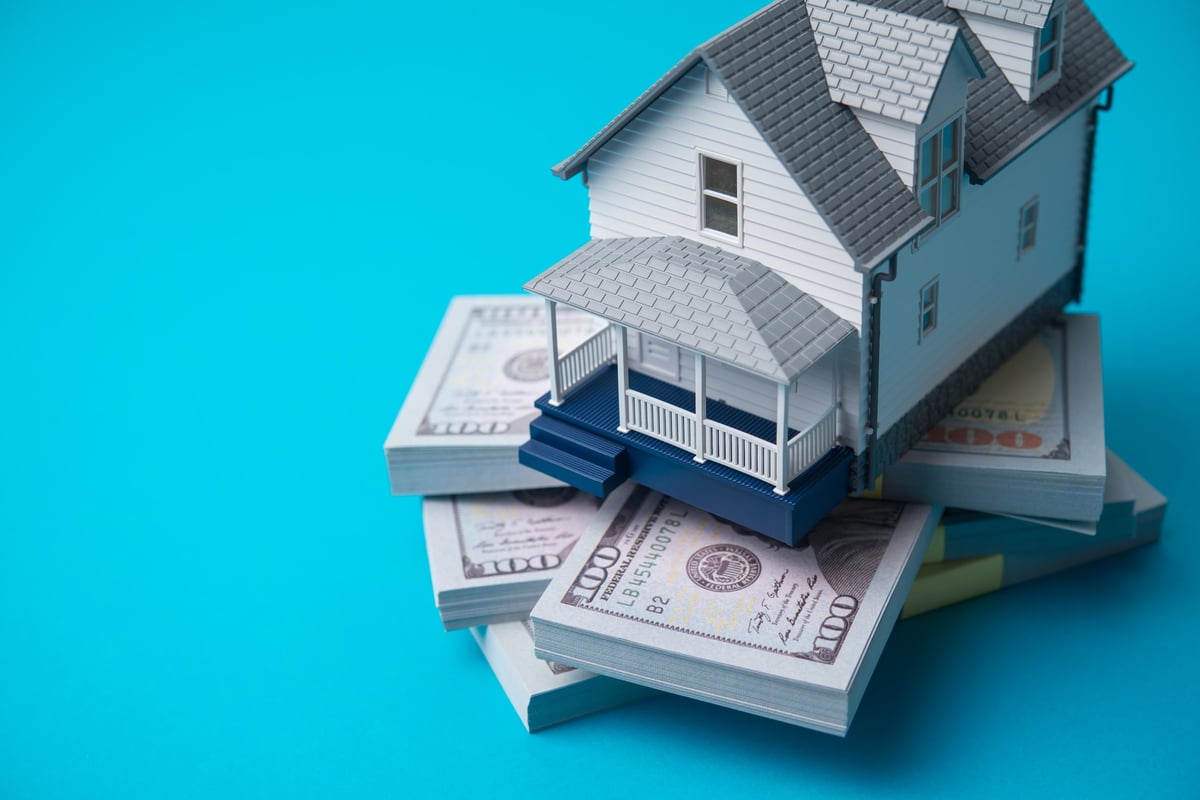
Rate buydowns, closing cost credits, design center allowances, and price cuts all sound like free money. They aren't. Here's what each one really costs you — and how to compare two builder offers that look identical on the flyer.
Kris Sutton
TX Broker #644333
Pura Vida Realty Group, Inc.
Buyer Representation
Every builder incentive you see advertised in Greater Austin is one of four things: a rate buydown, a closing cost credit, a design center allowance, or a price reduction. That's it. Once you know which bucket a promotion falls into, you can price it in about five minutes — and you'll stop being moved by the size of the number on the sign.
Here's the part almost no buyer is told at the model home: incentives are a marketing budget, not a discount. Builders carve out a per-home allowance for promotions and then decide how to spend it. A "$30,000 incentive" is not $30,000 off the house. It's $30,000 spent their way, in a form that protects their margin, their comps, and their lender relationship. Your job is to find out how much of that spend converts to actual value in your pocket — and whether a different structure would give you more.
If you'd rather start from what builders are actually promoting right now, our Greater Austin builder deals and incentives page tracks current promotions and quick move-in opportunities by community.
The one question that reframes everything: "If I take no incentive at all, what's the price?" If the answer doesn't change, the incentive was never a discount — it was already priced into the home.
The builder pays your lender a lump sum to lower your interest rate, either permanently or for a set period. A 2-1 buydown drops your rate two points in year one and one point in year two before it settles at the note rate. A permanent buydown lowers the rate for the life of the loan.
This is usually the most powerful option — and the most misunderstood. You are not receiving cash. You're receiving a lower payment, and the actual benefit depends entirely on how long you keep the loan. Sell or refinance in 24 months and a temporary buydown can evaporate with almost nothing left to show for it. Ask for the buydown in dollars, not points: "What is the lender being paid to do this, and what does it cost me in purchase price?"
The builder covers some or all of your loan closing costs, title policy, and prepaids. This is real money and it's the least glamorous, which makes it the easiest to undervalue. Typical Greater Austin buyer closing costs run roughly 2–4% of the purchase price once you count lender fees, title, survey, escrow deposits, and prepaid taxes and insurance. On a $475,000 home, a full credit can be worth more to your bank account than a buydown worth a similar headline amount — because it's spent on costs you were going to pay in cash either way.
The builder credits you toward flooring, cabinets, counters, and fixtures at their design center. This is the incentive with the largest spread between "advertised value" and real value, because the allowance is spent at builder-set prices on builder-selected products. A $20,000 design credit at a builder's own design studio may buy upgrades with a true market cost meaningfully below the sticker. It's still useful — you're getting finishes you'd otherwise pay for — but don't compare it dollar-for-dollar against cash. (For the full breakdown of which selections hold value and which don't, see design center upgrades: where to spend, where to stop.)
An actual lower price on the contract. This is the incentive buyers ask for and the one builders resist most — because a recorded price reduction affects the comps in that community and beyond. That resistance is exactly why a price cut is the strongest concession when you can get it: it reduces your loan balance, your tax basis, your interest cost, and your monthly payment simultaneously, and it survives a refinance. Expect it most often on spec and quick move-in homes that carry carrying costs for the builder every day they sit unsold.
Incentives in Greater Austin almost never come unconditional. Before you mentally bank one, confirm none of these three apply.
Most credits require financing through the builder's affiliated mortgage company. That's legal and common in Texas — but it means you must compare that loan against at least one outside quote, fees included. The contract language that governs this is worth reading closely: financing and credit contingencies in builder contracts.
Title and escrow are frequently bundled into the deal too. Review the title policy and escrow fee side by side with an independent quote before you sign.
Promotions expire, and they're frequently tied to a specific contract date or a specific inventory home. Expiration dates are a negotiation tool, not a law of physics.
Strip the marketing language and model both offers over the same five-year horizon — the typical ownership window for a first move in Austin. Use these four numbers and ignore everything else:
Total cash required at closing
Down payment plus closing costs minus any credit. This tells you what the incentive actually saves your bank account on day one.
Payment in months 1–24 and months 25+
Two numbers, not one average. A temporary buydown hides a payment shock in year three; you need to see it before you sign.
Loan balance after five years
A price reduction lowers this permanently. A buydown doesn't touch it. This is where "same sized" incentives separate.
Total interest paid over five years
Add the buydown benefit and subtract it from the cost of the loan. If the incentive doesn't move this line, it isn't saving you money.
We model every offer you're considering against those four numbers before you sign a contract, and we ask the questions builders don't volunteer answers to — base price without incentives, lot premium breakdown, current inventory pressure, and what neighboring homes in the same community actually closed at.
Our fee is paid by the builder, not by you, and it does not change based on which community you choose. That's the entire reason we can tell you when a deal is bad.
Three guides that pair with this one.
New Construction vs. Resale: The Real Trade-Off
A seven-line, five-year cost comparison — including the MUD and PID taxes most buyers miss.
Seven Builder Contract Clauses That Matter More Than the Price
Completion dates, deposits, escalation, and the lender requirement behind most credits.
Free Builder Guide: Read the Builder, Not the Sign
A 15-page walkthrough of how builder pricing, inventory, and incentives are actually decided.
Send us the incentive sheet, the base price, and the lender estimate. We'll come back with an apples-to-apples comparison and tell you plainly whether the deal holds up.
Pura Vida Realty Group, Inc. · Kris Sutton, TX Real Estate Broker #644333